
Hotel ballrooms have run the fan-event circuit for decades, and there are good reasons for that: parking, elevators, a loading dock, a kitchen that can feed three hundred people without drama. But more and more meet-and-greets are ending up in restored barns and timber-frame halls instead, and it is worth understanding why before you sign a contract on either one.
What a Barn Actually Solves
The honest answer is flexibility. A ballroom arrives with a fixed shape and a hotel’s opinion about how you should use it. A barn is mostly one open volume with a roof over it, which means the same room can run a group photo at two o’clock, a signing line at three, and a cocktail party at seven without anyone rolling in a wall. Ceilings are usually tall enough to hang lighting without a permit conversation, and the room comes with a backdrop already built in. That last part matters more than planners expect. Nobody photographs well against beige vinyl wallpaper.

The Floor Is Doing More Work Than You Think
Walk a venue before you book it and pay attention to what is under your feet. A signing line puts a few hundred people, a lot of heels, and several rolling road cases across the same twenty square feet over an afternoon. Old reclaimed lumber handles that well because it is genuinely old growth, cut from slower, denser trees than anything milled today, and it has already survived a century of barn duty.
The wrinkle is humidity. A packed room in August is a very different environment than an empty one in February, and solid planks move. That is why a lot of venues now install an engineered barn wood floor rather than solid reclaimed boards, keeping the antique face layer while the plywood core underneath stays put through the swings. From ten feet away, which is where your guests will be standing, the two look identical.
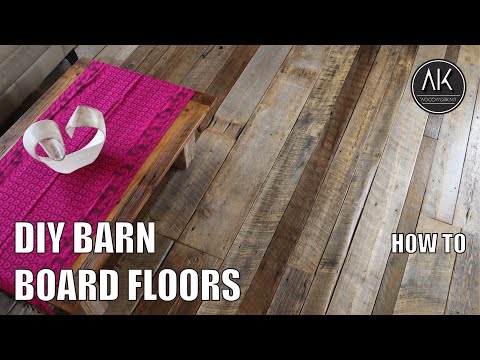
Watch: How To Install Barn Board Floors YOURSELF | DIY (YouTube)
Plan Around the Room, Not Against It

Two practical notes. Warm wood absorbs light in a way that white walls do not, so tell your photographer early and budget for a little more fill than you would in a hotel. And a hard floor under a timber ceiling makes a live room; it sounds wonderful for a fiddle and terrible for a host trying to run a Q and A. Get sound quoted properly instead of hoping the house system copes.
Go Walk One
Photos oversell every barn on the internet. Visit at the hour your event actually runs, stand where the line will stand, and listen. If the room works empty, it will work full.